Themba Zwane’s controversial Mexico dismissal revisited following World Cup allegations
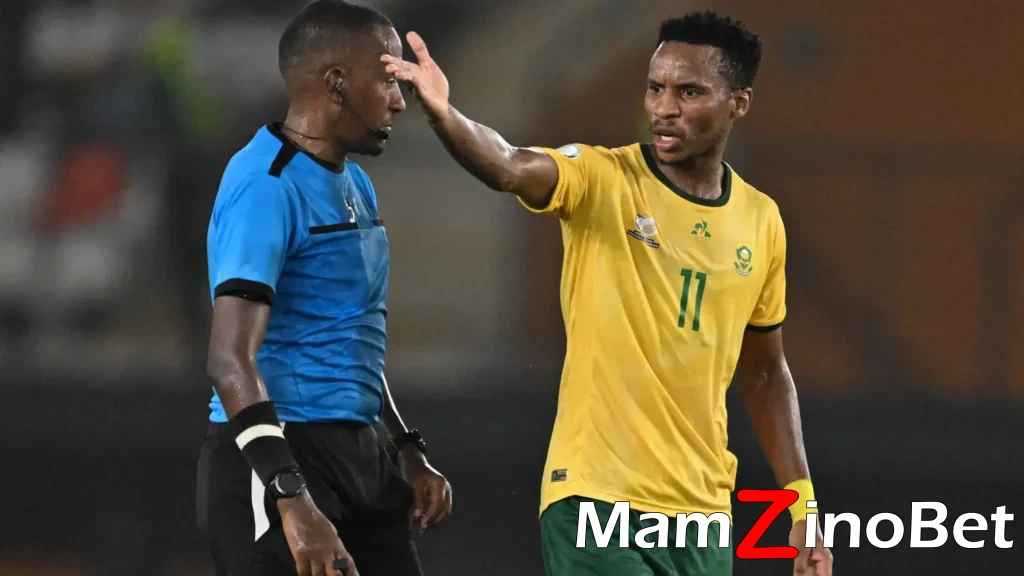

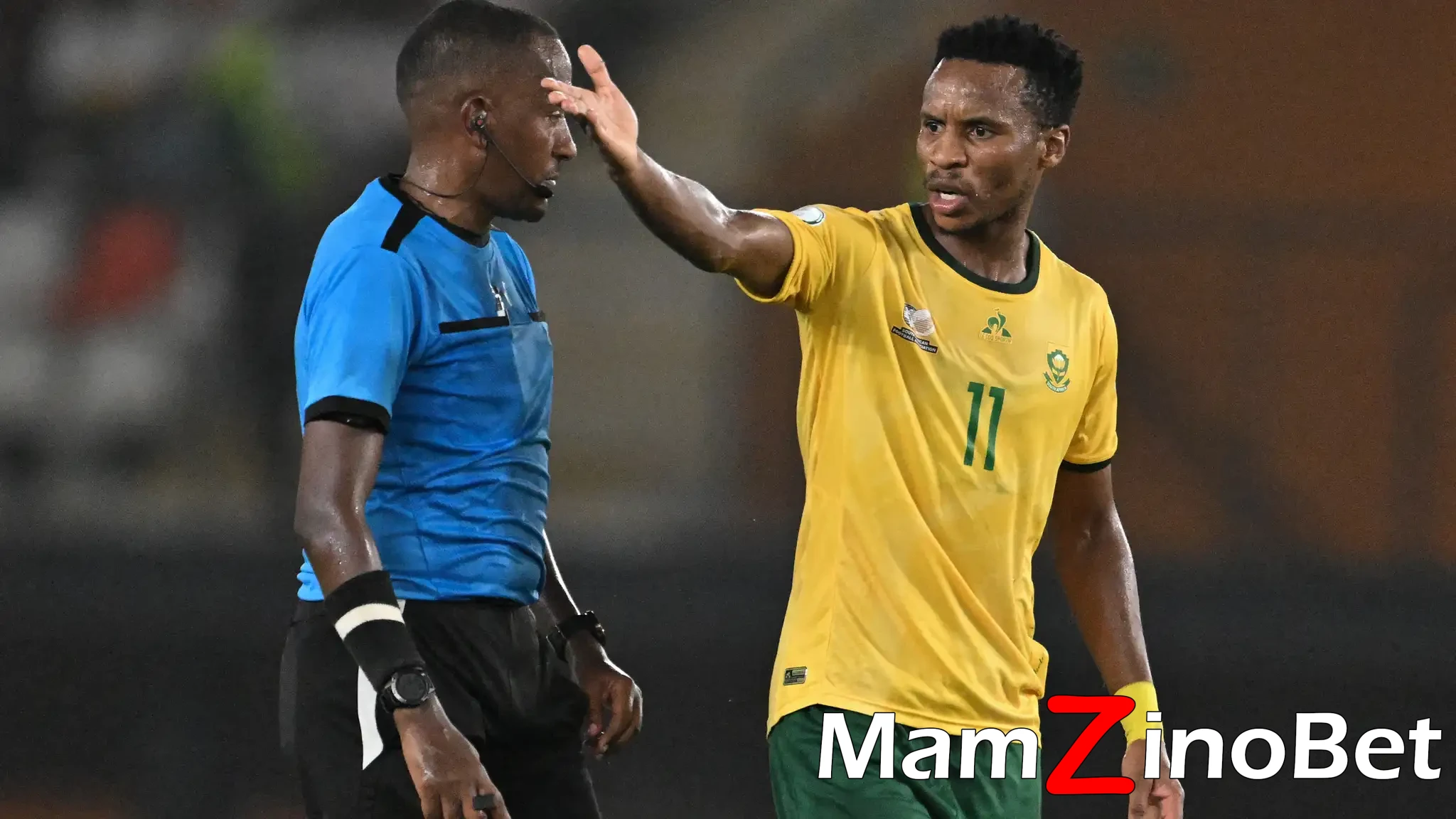
South Africa midfielder Themba Zwane’s red card against Mexico at the 2026 FIFA World Cup has come under renewed scrutiny after being identified as one of several incidents warranting further investigation by an independent sporting integrity body.
According to The Athletic, Zwane’s dismissal was among seven incidents highlighted by the Group of Copenhagen, an advisory body that monitors betting patterns and identifies events it considers unusual enough to merit closer examination.
However, FIFA has rejected any suggestion of wrongdoing, with the governing body insisting there is no evidence of match manipulation. The Group of Copenhagen, which operates under the Council of Europe, has classified the incidents as potentially irregular but has not presented any proof of misconduct.
During the tournament, FIFA’s Integrity Task Force, which worked alongside the Group of Copenhagen, concluded that it had found no irregularities.
The Group of Copenhagen has not yet published its full report, releasing only a summary of its findings. As a result, it remains unclear why Zwane’s red card was included among the flagged incidents.
The veteran midfielder was sent off after allegedly striking a Mexican opponent in the face while attempting to shield the ball. South Africa later appealed the resulting three-match suspension, arguing the punishment was excessive, but the ban was upheld, bringing Zwane’s World Cup campaign to an early end.
Among the other incidents that received ‘yellow notices’ from the Group of Copenhagen were:
- United States forward Folarin Balogun having his suspension following a red card overturned by a single FIFA official, allowing him to feature against Belgium.
- Prediction platform Polymarket recording approximately $4.8 million in wagers on Spain failing to defeat Cape Verde in their group-stage meeting, which finished in a 0-0 draw.
- A lengthy VAR review lasting more than three minutes that resulted in Ferran Torres’ goal being ruled out during Spain’s 4-0 victory over Saudi Arabia.
Speaking to The Athletic, gambling integrity expert Christian Kalb cautioned against interpreting the notices as evidence of wrongdoing.
“The Group of Copenhagen’s notices can be explained by atypical behaviours such as changes in odds or hedging liquidity. There are many explanations that are not manipulations,” Kalb said.
“The major problem is when there may be a conflict of interest and potential inside information on those issues. When we speak of prediction markets, we can detect some unusual behaviours, but we must be very careful, as they can be used for hedging markets.”
Share this content: